
Sustainability leaders know that meeting CSRD demands takes serious effort- auditing, impact assessments, and detailed disclosures. But submitting a polished PDF isn’t enough anymore. ESMA rules require reports to be machine-readable through iXBRL tagging.
This tagging powers the European Single Access Point (ESAP), making data searchable and comparable. Without it, even the best CSRD reports can go unnoticed by investors and regulators. Simply put, iXBRL tagging is essential to unlocking the full impact of your sustainability work.
Understanding the Basics: Why Tagging Matters More Than Ever
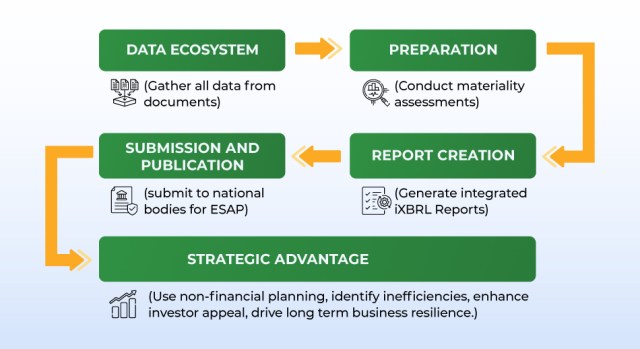
To understand the digital mandate’s significance, consider how the EU plans to use sustainability data through ESAP a centralized platform that relies on automated systems rather than humans to process disclosures. This platform requires Inline XBRL (iXBRL), which embeds machine-readable tags directly into reports that remain human-readable.
Every data point, from emissions to diversity metrics, must be accurately tagged using the ESRS taxonomy. When you submit your report, it goes through rigorous automated validation. Any tagging mistakes can lead to rejection, which legally counts as non-filing and may result in sanctions and damage to your reputation.
This digital system builds on the EU’s success with financial reporting standards, applying the same structured and transparent approach to sustainability data.
In today’s market, investors, regulators, and data providers demand precise, standardized, and machine-readable information. That’s why tagging is no longer an afterthought it’s a fundamental part of the CSRD reporting process.
Hurdles in iXBRL Implementation
While tagging may seem simple, it’s one of the most complex parts of CSRD reporting.
The ESRS taxonomy demands precise tagging of diverse disclosures from narratives to targets. Missteps can cause validation failures or misrepresent sustainability data. Tagging must also align tightly with double materiality assessments to avoid gaps in reporting.
Data fragmentation adds difficulty, as manual processes and scattered sources increase errors and delays.
Main Challenges:
- Narrative Mapping: Complex disclosures can fit multiple tags, causing inconsistencies.
- Double Materiality Link: Material topics must match exact taxonomy tags.
- Data Quality: Fragmented sources and inconsistent info lead to errors.
- Extension Overuse: Custom tags reduce comparability.
- Validation Risks: Poor tagging risks compliance issues despite accurate data.
The Power of Intelligent Automation in CSRD Reporting
CSRD compliance demands high technical precision, pushing leading organizations to move away from manual, end-of-cycle tagging. Instead, they’re adopting specialized automation tools that turn compliance from a burden into a strategic advantage.
By integrating purpose-built CSRD software with enterprise systems, companies gain:
- Greater Data Accuracy & Less Manual Work: Automated data pipelines reduce human errors by syncing source data directly with digital tags.
- Time and Cost Savings: Embedding iXBRL tagging early eliminates the costly last-minute rush, saving hundreds of hours.
- Faster, Smoother Filings: Real-time taxonomy updates and dynamic error checks help resolve issues early, speeding up submissions.
- Enhanced Auditability & Compliance: Unified platforms provide clear digital trails for audits, ensuring transparency and regulatory adherence.
Looking ahead, sustainability reporting will become increasingly digital and strategic. ESAP’s machine-readable data will be accessed through APIs, analytics, and AI transforming sustainability data into a valuable business asset.
Automation offers reporting teams many benefits:
- Reduced manual effort
- Consistent, accurate data
- Accelerated filing timelines
- Clear audit trails
- Streamlined, repeatable processes
Conclusion
The Corporate Sustainability Reporting Directive (CSRD) has transformed corporate disclosure. Today, sustainability performance is evaluated not just by narrative or design but by the quality of structured data. In a world shaped by ESAP and automated data systems, structured data is the true source of truth.
The strength of your CSRD report depends on the technical framework supporting it. To communicate your sustainability story accurately to investors, regulators, and markets, digital completeness must be a priority.
CSRD signals a shift toward digital transparency. The report itself is no longer the end product; the structured data behind it is. As ESAP evolves, machine-readable sustainability data will drive regulation, investment decisions, benchmarking, and AI analysis.
This underscores why iXBRL tagging shouldn’t be treated as a last-minute compliance task. It’s a vital part of how sustainability information is discovered, understood, and trusted. In the digital age, if ESAP can’t read your data, your report hasn’t fulfilled its purpose.
This is exactly where platforms like IRIS Carbon come in to help you manage, structure, and streamline your sustainability data, ensuring your reporting is both compliant and insightful.