
Environmental, Social, & Governance (ESG) reporting is here to stay. What was once considered as “nice to have” is now essential to investor confidence, risk minimization, and long-term financial performance. However, many businesses still have trouble with ESG reporting.
67% of executives say ESG reporting is more complex than financial reporting.
Investors, regulators, and other stakeholders now expect more than promises now they want numbers, transparency, and action. But as organizations rush to meet these expectations, many stumble into avoidable pitfalls that compromise credibility and impact.

The Cost of Getting ESG Wrong
Non-compliance or half-hearted efforts can lead to a loss of investor trust, negative media coverage, disengaged employees, and lost customers.
And the consequences are becoming very real. In 2022, Goldman Sachs paid $4 million to settle charges with the SEC for misrepresenting ESG investment policies. Today’s ESG mistakes can lead to tomorrow’s headlines, lawsuits, and stock price dip.
And the data is clear:
| 75% of companies are unprepared for ESG data assurance requirements. | Only 36% track Scope 3 emissions, despite their growing importance. | 85% of firms report using multiple ESG frameworks, which leads to fragmentation and confusion. |
Companies that fail to develop a credible ESG strategy are at risk of falling behind on both investor trust and regulatory compliance.
Brian Moynihan, Chairman and CEO, Bank of America
Top ESG Reporting Pitfalls to Avoid
Even the most well-intentioned ESG programs can get derailed by missteps. Here are the most common pitfalls:
1. ESG Frameworks & Standards Overload
Companies involved in ESG compliance commonly stumble over a huge number of ESG frameworks and standards and experience difficulties when choosing which to follow. Also, many organizations follow multiple standards but fail to connect them coherently.
Global ESG regulation has increased by 155% over the past decade.

2. Underestimating data complexity
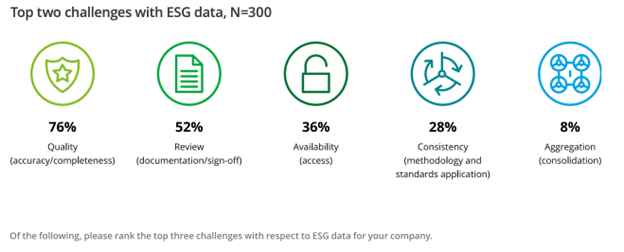
You can’t improve what you don’t measure but even measurement is tough when ESG data lives in silos. Pulling ESG data from dozens of systems like finance, HR, supply chain is not an easy task.
Without integrated systems and automation, organizations fall into manual, error-prone workflows that are both time-consuming and unsustainable. The result? Inconsistent metrics and data, delayed disclosures, and increased compliance risk.
As McKinsey highlights, when departments operate in isolation, they prioritize their own goals over the broader organizational mission. This misalignment leads to data fragmentation, misreporting, and ultimately, a loss of credibility with stakeholders.
88% of executives include data quality in their top three ESG concerns.
3. Treating ESG as a side project
ESG is not just a checkbox for annual reports; it’s a long-term business strategy. When ESG is siloed within sustainability or compliance teams, its value gets lost. For ESG to succeed, it needs executive sponsorship, cross-functional ownership, and alignment with core business priorities.
4. Chasing too many metrics
Many companies make the mistake of trying to report on everything at once. This leads to diluted focus, inconsistent data, and unsustainable workloads. Instead, zero in on the material issues that matter most to your stakeholders and your business model.
5.Reporting without readiness
Jumping straight into external ESG disclosure without first setting internal foundations like data accuracy, internal audits, role clarity can backfire. Once disclosures are public, they’re permanent. Ensure internal confidence before going external.
6. Greenwashing and overpromising
The pressure to look good on ESG performance can push companies into misleading communication.
Inconsistent metrics, exaggerated claims, or unclear methodologies not only mislead stakeholders but also attract regulatory and reputational risk.
7. Neglecting the Supply Chain
Your ESG profile extends beyond your walls. Third-party vendors and suppliers are increasingly part of the equation. Scope 3 emissions, labor practices, and ethical sourcing issues can all derail ESG goals.

Wrapping Up: From Pitfalls to Progress
There is no need for ESG reporting to be disorganized. With the correct approach and tools, ESG compliance may become a competitive advantage.
Choose an ESG platform that:
- Simplifies data integration
- Automates compliance workflows
- Supports evolving regulatory requirements
- Enables actionable insights
A Final Tip
The ESG reporting journey is complex but with the right ESG strategy and tools, it doesn’t have to be chaotic. It’s crucial to choose an ESG platform that supports your objectives, streamlines your data procedures, and keeps abreast of changing standards. Building trust is more important than merely using technology.
Sources: Slipcase, Deloitte, ESG Today 1, ESG Today 2, Veridion, McKinsey, Action.Deloitte